5 YC Fall 2026 startups
worth watching.
The interesting question is what happens after the prompt. Five young companies working on the data, computers, coordination, and operations that turn AI into useful work.
Find your starting point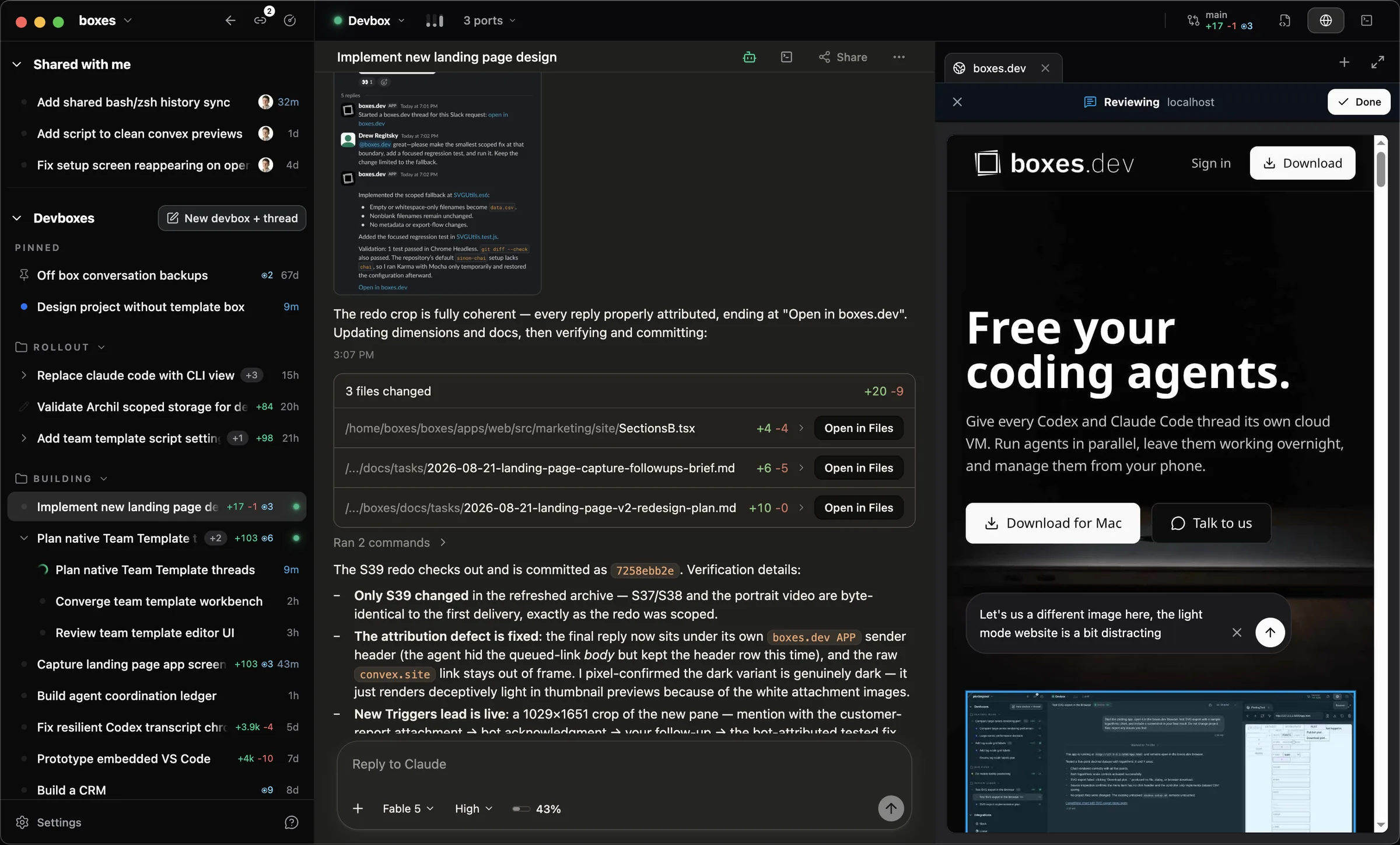
Start here: Frontrunner connects revenue signals to GTM actions. Kiwi makes agent decisions inspectable through company data. Boxes.dev gives coding agents cloud computers. Agent Relay connects agents across people and machines. Adside brings advertising research, creative, and operations together.
All five are listed in Y Combinator’s Fall 2026 batch. This is a practical shortlist for founders, marketers, and teams already experimenting with agents, not a forecast of which companies will win.
Reporting scope: Public websites, documentation, YC listings, and browser inspection of public demonstrations, checked October 27, 2026. We did not connect private accounts, launch campaigns, provision machines, or benchmark product performance. Public examples show the intended workflow, not independently verified customer results. Selection method and the other candidates.
What work is getting stuck?
These products solve different problems. Choose a task to narrow the comparison, then open the company’s reporting below.
Showing 5 companies. Access and prices checked October 27, 2026.
| Company / job | Who it fits | First practical use | Access / USD |
|---|---|---|---|
| FrontrunnerAct on revenue signals | GTM operators and sales teams | Research and route an inbound account | Demo-led; no public list price found |
| KiwiInspect the underlying data | RevOps and customer-facing teams | Draft a renewal brief with source evidence | Book a demo; no public list price found |
| Boxes.devRun agents away from your laptop | Developers using Codex or Claude Code | Run a bounded task on a cloud devbox | 20 compute hours in trial; Starter $19/user/month |
| Agent RelayLet agents exchange context | Teams with several coding-agent sessions | Ask another agent one API question | Free to start; open-source self-hosting option |
| AdsideOperate paid campaigns | Brands and agencies with ad budgets | Draft a campaign for human review | $990/brand/month; $590/month equivalent on annual billing |
Prices and access can change. Boxes.dev requires your own supported agent subscription or API usage. Adside’s service fee is separate from media spend. Details and source links follow.
The work around the AI
is becoming the product.
A capable model still needs current information, somewhere to execute, a way to hand work over, and a sensible point to stop. That is the pattern this selection brings into focus. It is our editorial interpretation, not a claim that these five form a tested integrated stack.
Original explanatory map. Products overlap; no integration between them is implied.
Frontrunner
Give the next sales action a reason.
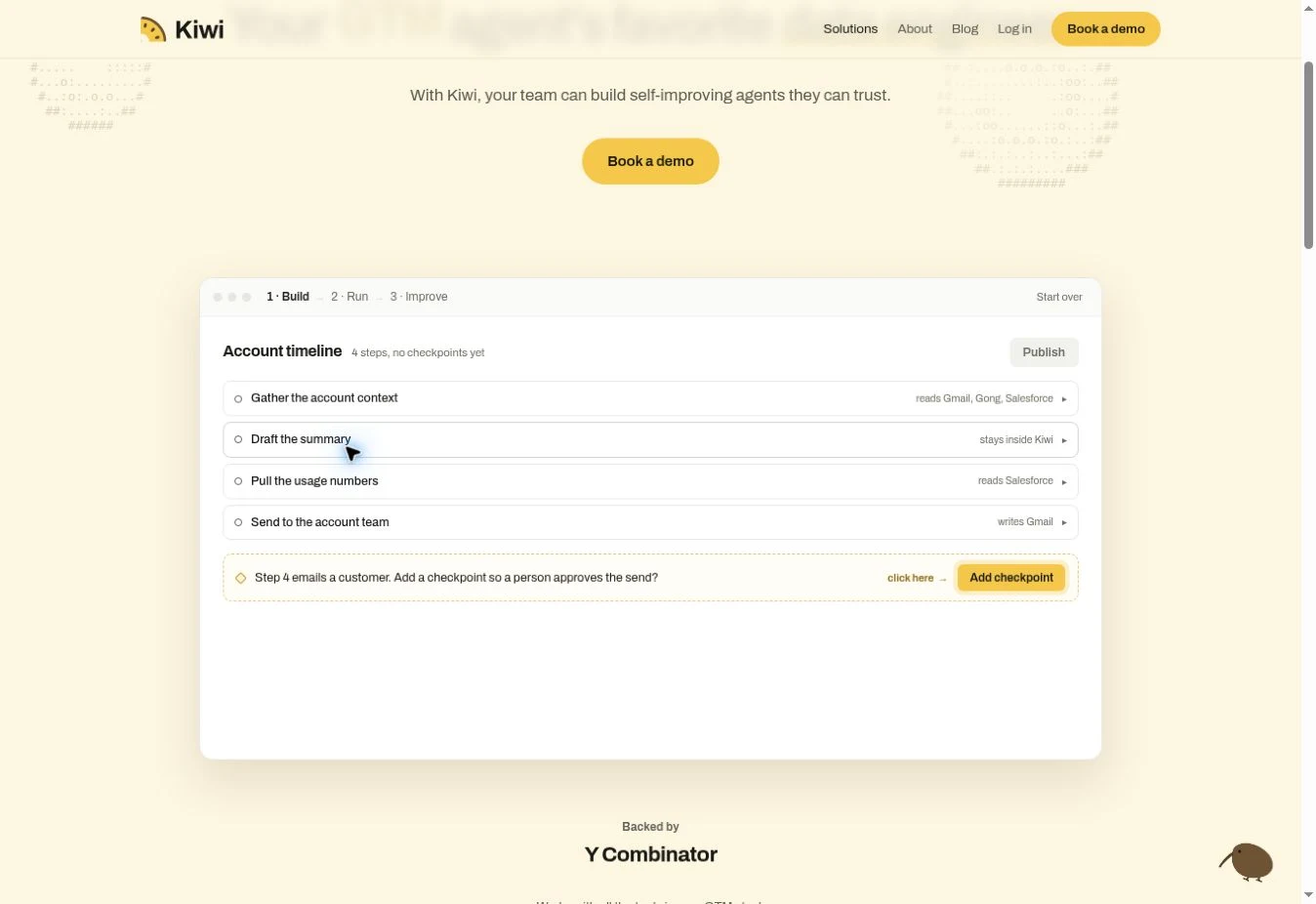
Frontrunner is an agent platform for go-to-market work. It connects business systems so research, qualification, routing, and follow-up can use shared context. The problem is familiar: a useful buying signal appears in one system while the person who should act is working in another.
The founders describe a graph connecting accounts, people, conversations, and signals. Agents use that context to research prospects, update records, and identify actions. The distinction from asking a chatbot for a list of leads is continuity: the product is designed to keep business context available across recurring work. That design is a company claim, not a verified performance advantage.
On the public site, the Acme example shows an agent library, an audience table with signal explanations, and a project with context and draft introductions. We inspected that interface in the browser; we did not execute an agent. It makes the proposed job legible: spot a relevant event, explain why it matters, and put the next step in reach.
Where it could earn its place
A B2B team could start with one inbound qualification workflow or a small set of dormant opportunities. The important comparison is the complete existing process, including enrichment, CRM maintenance, and the handoff to a rep. A separate tool only helps if it removes enough of that work to justify another system.
Frontrunner’s YC launch includes customer performance figures. We have not independently verified them and do not use them to rank the company here. What earns its place is the specific attempt to connect a changing business picture to repeatable action.
Sources: YC profile and founder launch · Public agent library · Request a demo.
Kiwi
Ask the agent to show its working.
A source link is useful.
The query and the data behind a decision are more useful still.
Kiwi is a data and workflow layer for GTM agents. It addresses two problems that a better prompt cannot reliably fix: agents working from incomplete information and teams using different versions of the same workflow.
Kiwi says it syncs business-tool data into a data lake, breaks work into agent steps and human checkpoints, and exposes the SQL query and data snapshot used for data-dependent steps. Approval and correction records become material for evaluating future changes. Its public solutions include renewal preparation, account timelines, and call follow-through.
We clicked Draft the agent in the homepage demonstration. The sample developed into an account timeline with four steps and an invitation to add a checkpoint before an email step. This was a scripted public demonstration. It showed how the company explains oversight; it did not establish that a live workflow would handle our data accurately.
Why this is a different buying question
Frontrunner emphasizes revenue actions and signals. Kiwi puts more emphasis on the evidence and maintenance underneath agent workflows. The overlap is real, but a team frustrated by disputed renewal summaries has a different starting problem from a team that needs a better prospect queue.
The open question is whether inspectability becomes operational trust. A visible SQL query can still reflect an incorrect account mapping or an incomplete source. We would want to see how Kiwi handles conflicting records, stale syncs, permissions, and a correction that should affect later runs. The architecture is interesting because it gives those questions a concrete place to be asked.
Sources: YC profile and founder explanation · Public demonstration · Workflow examples.
Your task comes first.
If you are still figuring out which kind of software you need, start with the Useful AI Finder. For a buying decision, record requirements, evidence, and costs in the Software Decision Workspace.
The Finder is a separate curated catalog. This article does not imply these five products have been added to it.
Boxes.dev
The agent needs a computer, too.
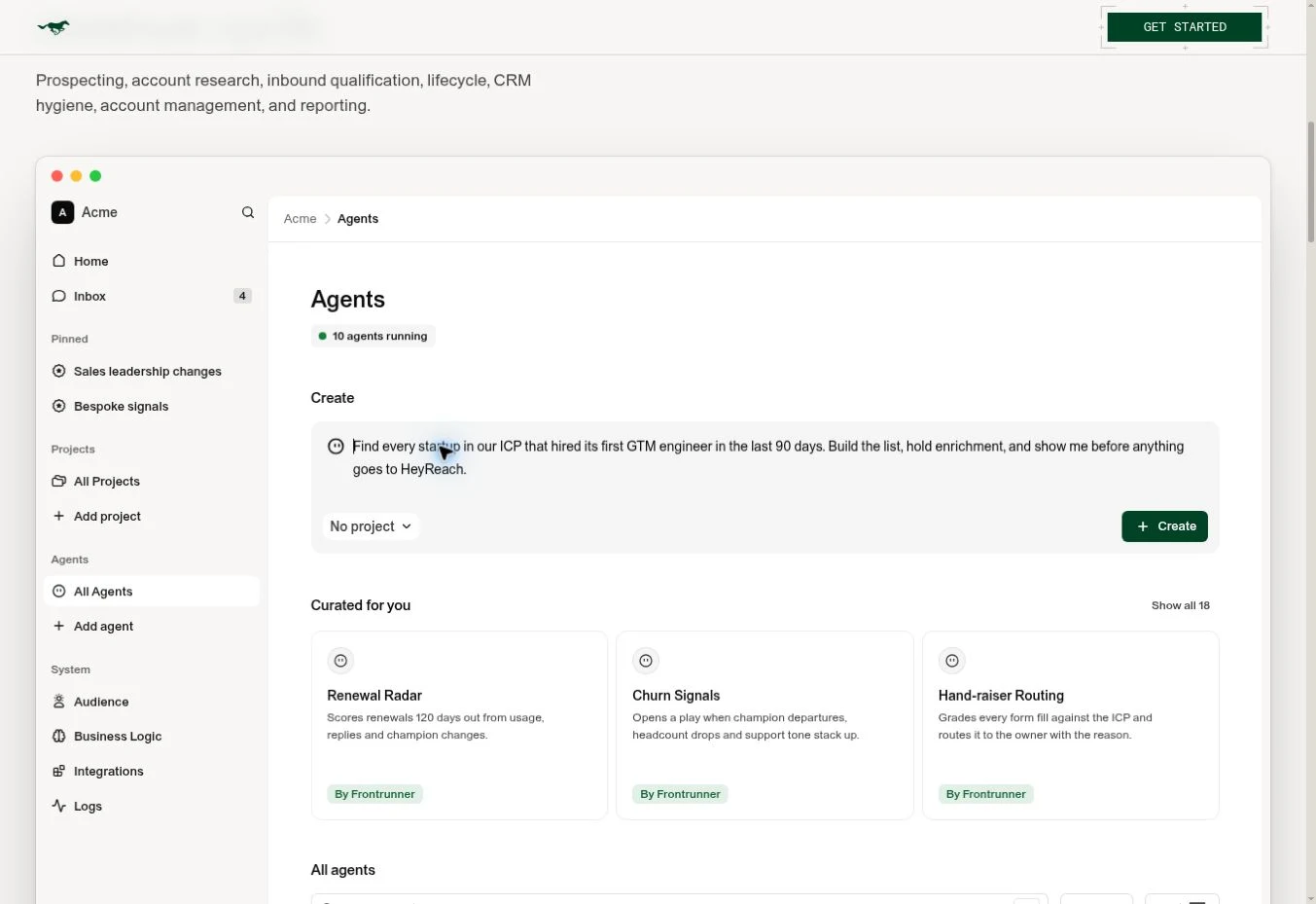
Boxes.dev runs coding agents on managed cloud computers. Its premise is straightforward: an agent working on your project should not depend on your laptop staying awake. Each devbox has its own Linux environment rather than sharing one local machine’s processes and ports.
The documented setup starts with an agent inspecting the existing development environment and drafting a migration plan. After review, the environment is moved into a template; new devboxes start from that saved setup. The workbench, mobile clients, and terminal are different ways to inspect and steer remote work.
We inspected the public workbench imagery and switched the site’s device tabs. We did not upload a repository or run a cloud task. The official site documents Slack, Linear, API, and scheduled triggers, along with diff review and application previews. Those are documented capabilities, not results from our own run.
The practical difference
A local worktree gives you a separate checkout. A separate computer also separates processes, dependencies, ports, and database state. That becomes relevant when concurrent agents need to run applications, change schemas, or use different development setups.
Its public pricing lists a trial with 20 compute hours, then Starter at $19 per user per month with 50 hours, Pro at $99 with 250 hours, and Max at $249 with 600 hours. Extra hours are listed at $0.60. Your supported Codex or Claude Code subscription or API usage is separate. These are the current homepage figures; the final plan and checkout terms deserve another look before buying.
The company’s laptop-free promise is attractive. The meaningful test is whether your particular project starts, runs, and remains understandable remotely, including its services and credentials. For a simple single-agent task, local execution may already be sufficient.
Sources: YC profile · Setup explanation · Current plans · Data and credential handling.
Agent Relay
Stop being the messenger between agents.
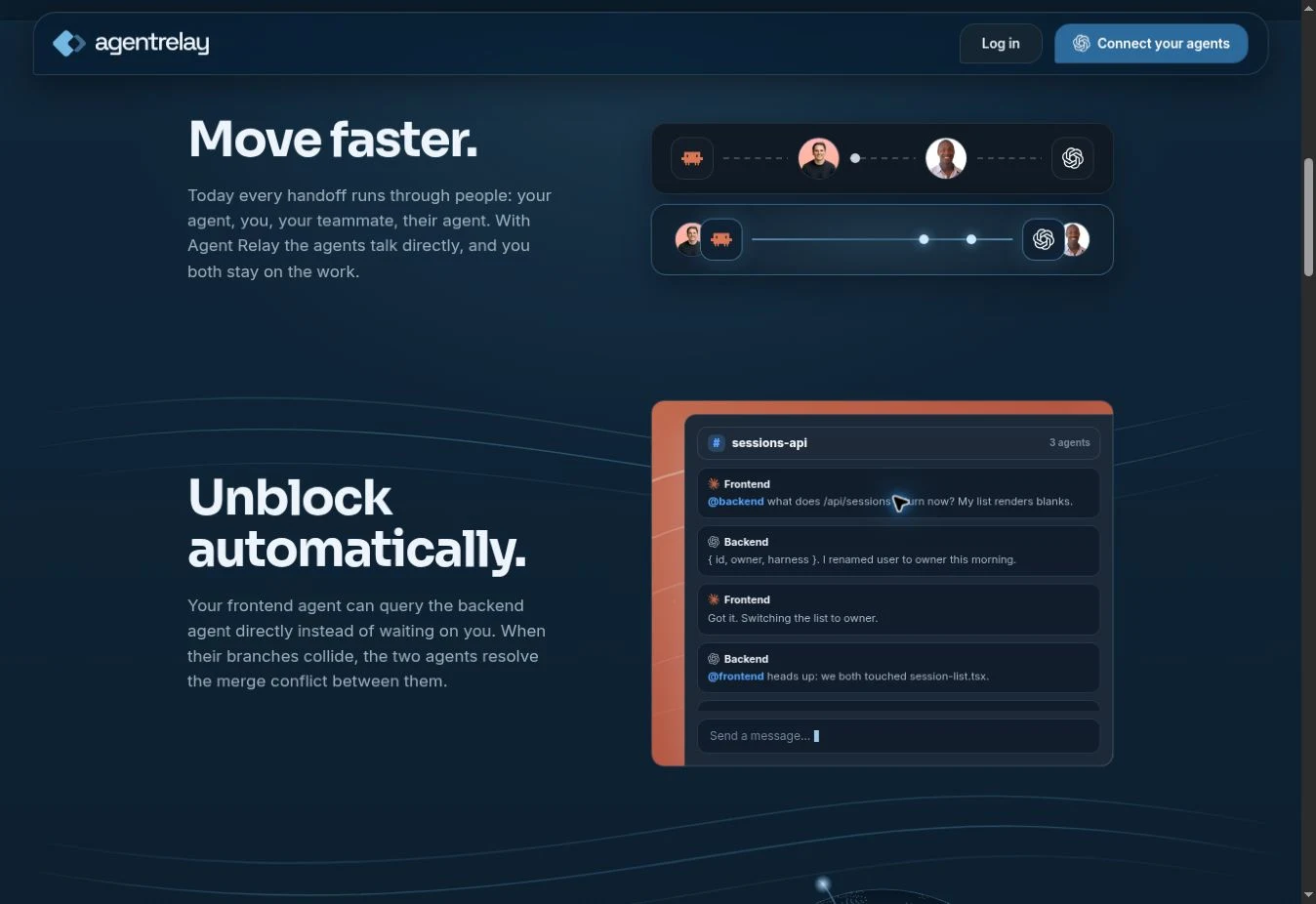
Agent Relay lets coding agents message one another and consult shared sessions. It targets a coordination cost that appears when everyone on a team has an assistant: a technical question still travels from one agent to a person, to a teammate, and finally to the teammate’s agent.
The public example makes that problem concrete. A frontend agent asks what an API returns after a field has been renamed. A backend agent supplies the changed structure. The point is preserving the context around the answer as well as delivering the message.
The current quickstart describes a desktop app, workspace sign-in, session sharing, and a per-session address. It lists macOS and Linux support. New sessions are uploaded after sign-in; older sessions remain local until selected. We reviewed those instructions and the public examples, but did not install Relay or connect our own sessions.
Coordination is its own job
Boxes.dev supplies somewhere to run. Relay concentrates on agents reaching one another across teammates, tools, and machines. Some capabilities overlap, so a team should check what its current agent platform already provides before adding a separate coordination layer.
The hosted route is advertised as free to start, and the company links an open-source self-hosting option. We did not find a clear paid-plan rate on the pages reviewed. Self-hosting still involves infrastructure and maintenance, even when the source is available.
The limitation is organizational as much as technical. Shared transcripts can contain sensitive work, and agents need boundaries around whose context they may read and which instructions carry authority. Messaging is useful when a team can trace the answer and keep ownership of the resulting change.
Sources: YC profile and launch · Product documentation · Current installation and session-sharing instructions · Open-source repository.
Adside
The ad is only one part of the campaign.
Do you need
another creative generator,
or help operating the campaign?
Adside combines paid-ad research, creative work, reporting, and operations. It is aimed at brands and agencies juggling ad accounts and the work between them. Producing an image or headline is only one step; campaigns also need audiences, tracking, budget choices, and ongoing attention.
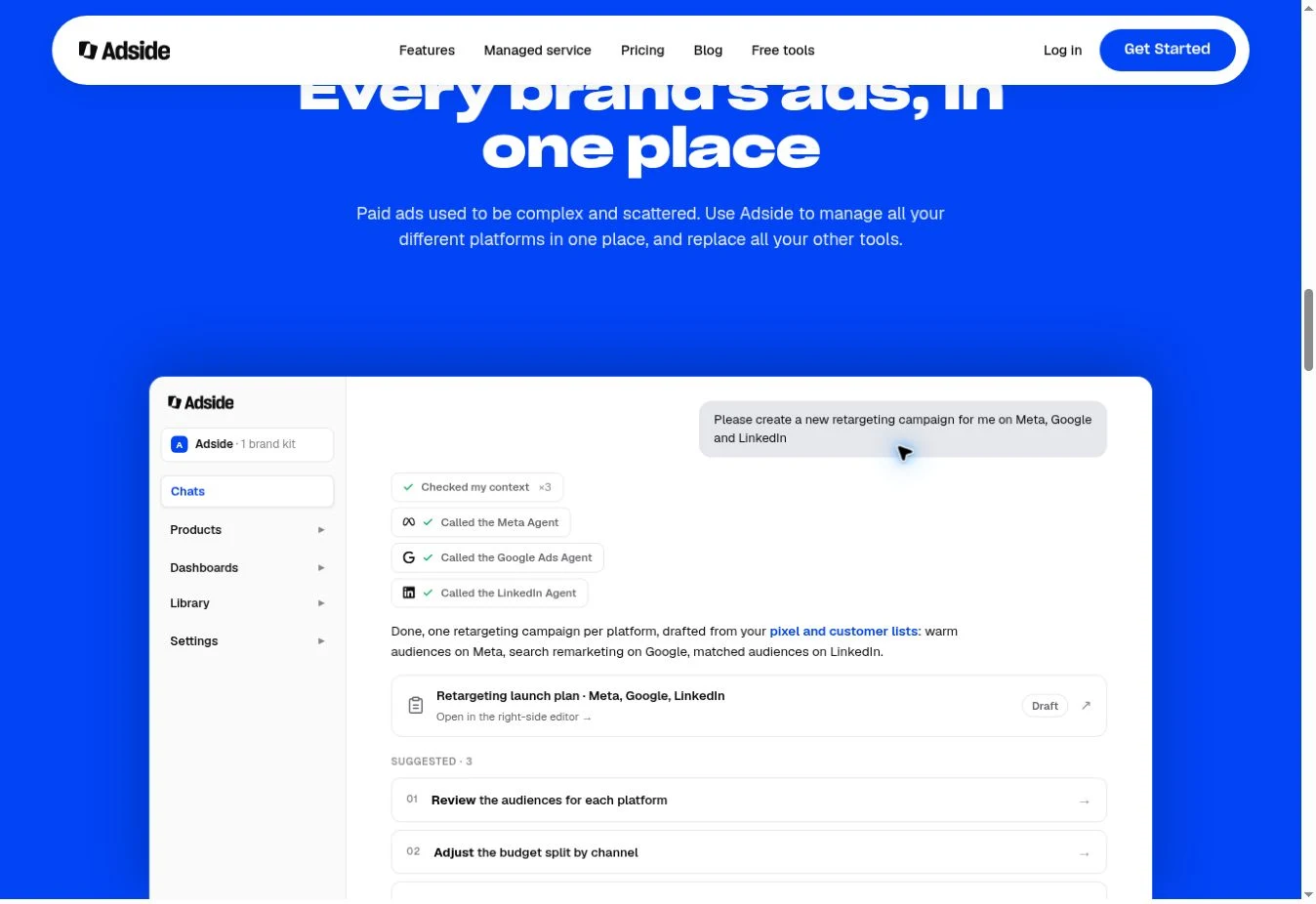
Its site describes specialized agents for market research, brand context, creative analysis, and recurring operations. We switched the public feature view to Ad Operations and inspected its campaign illustration, where a request becomes a draft across Meta, Google, and LinkedIn. That demonstration helps explain the workflow. It does not prove campaign quality or return on ad spend.
The company also offers a managed service with human experts. That makes the proposition broader than a creative-generation subscription: customers can buy software to operate themselves or a service that takes on more of the execution.
The price changes the audience
We checked the live billing toggle. The AI Agency plan lists $990 per brand per month on monthly billing, or $590 per month equivalent billed annually. The managed service lists 10% of ad spend, with a $3,500 monthly minimum. Media spend is a separate budget. These figures make Adside more relevant to an existing advertising operation than a creator looking for a cheap way to make a few assets.
The practical differentiation is connecting creative and operations in one workflow. The question is how much of that workflow works for your specific accounts, conversion setup, and approval process. Platform coverage also differs between the software and managed service, so confirm the channels you need rather than assuming every advertised channel belongs to every offer.
Adside’s site shows time-saving and performance illustrations. We did not reproduce them. A worthwhile trial would judge approved campaigns, reliable tracking, and the amount of human repair required, alongside the subscription or service fee.
Sources: YC profile and launch · Product walkthrough · Pricing · Managed service and scope.
Choose a problem
you already have.
Start with Frontrunner if useful revenue signals are not reaching the right action. Start with Kiwi if your team keeps questioning what an agent’s answer is based on. Look at Boxes.dev if local execution is the constraint, or Relay if coordination is. Consider Adside when campaign operations are already a real part of your budget.
A productive next step is a bounded task with a result you can inspect. The best outcome may be discovering that your existing software is enough. These are companies worth investigating, not five subscriptions every team needs.
How these five made the cut
We reviewed 13 candidates across Fall 2026 and Summer 2026 using YC’s official directory, company profiles and launches, then followed product sites and public documentation. Selection favored a clear practical job, identifiable differentiation, inspectable evidence, and relevance to Useful in Practice readers. No search-volume dataset was used and no demand figures are claimed.
Broad YC list searches surfaced directories and investor-oriented batch summaries. This guide takes the narrower reader task: understanding what a new product does, what access exists, and what to check before using it. The five companies are not scored by investment potential, traction, or likely success.
Already in the notebook
Voyager and Vyra have dedicated creative-tool analyses. Agent 37 has its own coverage. We linked those articles instead of repeating them.
Our earlier OpenSEO note records the original product angle. At this research check, YC’s OpenSEO URL presents EveryApp, with OpenSEO discussed as an earlier standalone product. Readers should verify the current offering before relying on that older framing.
Reviewed, held back
Cyclon is a compelling AI-phone idea, but its site labels the hardware as a concept in development. It belongs on a hardware watchlist rather than among these immediately investigable work tools.
Hue has an interesting production-based agent-testing angle; we did not obtain enough inspectable product material for a full section. UXDuck addresses drone interfaces, a more specialist audience. Grocalo is a Summer 2026 creator-content company; the public material reviewed did not give us enough workflow detail to displace these five.
Evidence, independence and corrections
Company descriptions are grounded in the linked primary sources. Product architecture, integrations, and improvement claims remain attributed to the companies unless a direct observation is specified. Screenshots of marketing examples are labeled, and company-supplied imagery is credited. The proposed first tests are editorial suggestions, not completed trials.
No company paid for inclusion. This article contains no affiliate links. Future commercial work would be separately scoped and disclosed, with no promise of favorable editorial coverage. Read our editorial standards. Send factual corrections to Stephen Stilwell.
Primary starting points: YC Fall 2026 directory · Launch YC. Availability and pricing checked October 27, 2026.
Show us the part
that deserves a closer look.
Founders can send a product demonstration or a correction. For creative explainers and commercial projects, explore working with Stephen. Editorial selection stays independent.