
Nectar Social: can an AI agent run the social stack?
The interesting promise is what happens between a customer’s comment, a team’s next decision, and a sale.
Based on public product information and company-published evidence checked October 5, 2026. I have not used Nectar or tested its agents. This is independent editorial analysis, not sponsored content.
The interesting part
is the work between replies.
A person asks whether a product will work for them. Someone else complains about a delayed order. A creator posts a useful demonstration without tagging the brand. All three matter to the business. They may land in three different tools, with three different people responsible for noticing.
That is the problem I find interesting about Nectar Social. An AI-written reply is easy to demonstrate. A system that recognizes what a conversation means, gives it an owner, and carries the context into the next action is a much bigger proposition.
My read: Nectar is combining established categories around a different unit of work, the customer conversation. That could make it an operating layer for social teams. Whether it earns that role depends on the handoffs, permissions, and measurement underneath the dashboard.
What is Nectar Social?
Nectar describes itself as an AI-native social operating system spanning community management, social intelligence, creator workflows, and conversational commerce. Its public customer list includes e.l.f. Beauty, Figma, Liquid Death, Babylist, Graza, Caraway, and Kosas. That is a useful signal of the audience it is pursuing, not proof that every customer uses every feature.
Sisters Misbah and Farah Uraizee founded the company in 2023 after product and engineering leadership roles at Meta. In its May 2026 funding announcement, Nectar reported a $30 million Series A led by Menlo Ventures and its Anthology Fund, created with Anthropic, with participation from GV, True Ventures, and Kinship Ventures. It also described plans to expand engineering and applied AI hiring in the Bay Area and New York.
The funding makes Nectar worth following. The more useful question for a buyer is whether it can remove the recurring work of moving information between teams.
Eight places.
One conversation.
People carry the context between tools.
Coordinate the work
around the signal.
One operating layer, with humans setting the boundaries.
An editorial model of the consolidation opportunity, not a claim that every specialist tool can be replaced.
A new category, or a better combination?
Social scheduling, listening, community management, creator tracking, support, and attribution already have software categories. Putting them in one product does not automatically create a new one. Existing social suites are also broader than publishing calendars, so the comparison should be with your actual setup, not a deliberately weak version of it.
Nectar’s strategic bet appears to be that shared context makes those functions more valuable together. A community interaction can inform a response, a creator relationship, a product decision, and a purchase journey. If each function starts with a separate record, people become the integration layer.
| Work today | What consolidation could change | What must survive |
|---|---|---|
| Scheduler + analytics exports | Connect the published post to the conversation it starts. | Channel-specific publishing and measurement needs. |
| Listening tool + feedback spreadsheet | Move from a detected theme to a named owner and next action. | Original evidence and the ability to challenge a summary. |
| Community inbox + support queue | Resolve routine questions and route exceptions with context. | Case ownership, escalation, and customer history. |
| Creator tracker + separate reports | Evaluate a relationship alongside the response it generates. | Contracts, approvals, payment, and usage rights. |
| Social metrics + commerce reports | Trace a conversation toward a measurable outcome. | Attribution definitions and independent revenue records. |
This is a map of the consolidation opportunity, not a claim that Nectar fully replaces every tool in the left column. I would be particularly cautious about assuming a social platform replaces a help desk, a creator contracting system, or a complete publishing workflow without seeing those jobs demonstrated.
For a head of social, the operational gain would be fewer dropped decisions: less copying a comment into Slack, exporting a report, and asking who followed up. For a founder, it could mean hearing a repeated objection while there is still time to change the launch.
What happens after the signal?
My operational reading of Nectar’s product, not a feature checklist.
Engage
Answer, route, or ask a person. The next action needs an owner.
Listen
Find the repeated question inside the noise. Keep the source evidence.
Perform
Connect activity to outcomes. Know what the measurement actually means.
Community
See the people behind the interactions. Carry relationship context forward.
What Nectar Agent is designed to do
Nectar’s launch describes Agent handling responses, moderation, routing, and resolution, with teams retaining control over voice, permissions, strategy, and approvals. The product overview lists brand-voice calibration, historical message replay, confidence thresholds, and topic- or channel-specific autopilot settings.
Those controls matter more to me than a convincing sample reply. Brand voice is partly vocabulary, but judgment is knowing when to stop joking, avoid a promise, or involve someone who can actually solve the problem.
An illustrative launch-day workflow
Imagine a skincare brand launches a moisturizer. Its team receives questions about ingredients, requests for a restock, reports of damaged deliveries, and comments from creators interested in samples.
A sensible pilot would allow approved factual answers about the product, route order problems to support, and send partnership requests to the creator team. Questions requiring medical advice would stay with an appropriate human review process. The team would check the original message and the proposed action before widening automation.
This is the workflow I would ask Nectar to demonstrate, not a workflow I have run. The acceptance test is whether the correct next step happens, including when the agent declines to answer.
That connects to the distinction in my Zendesk AI analysis: a helpful conversation and a resolved customer problem are different outcomes. A social response should not close an issue that still needs a refund, a replacement, or an investigation.
Why AI changes the economics
The opportunity is to interpret varied language at a volume that would otherwise require constant manual sorting. People rarely write their intent as a clean database field. They mix a compliment with a complaint, refer to a product indirectly, or ask a question inside a video.
If classification and drafting become cheaper, a team can spend more time on exceptions and patterns. But cheap interpretation is valuable only when errors are visible. Automation that confidently routes a complaint to a sales flow just moves the cleanup downstream.
I would borrow the approach from my voice AI testing guide: use difficult, realistic inputs and inspect the resulting action. A social pilot should include sarcasm, corrections, mixed intent, and messages with too little context.
Listening should end with a decision
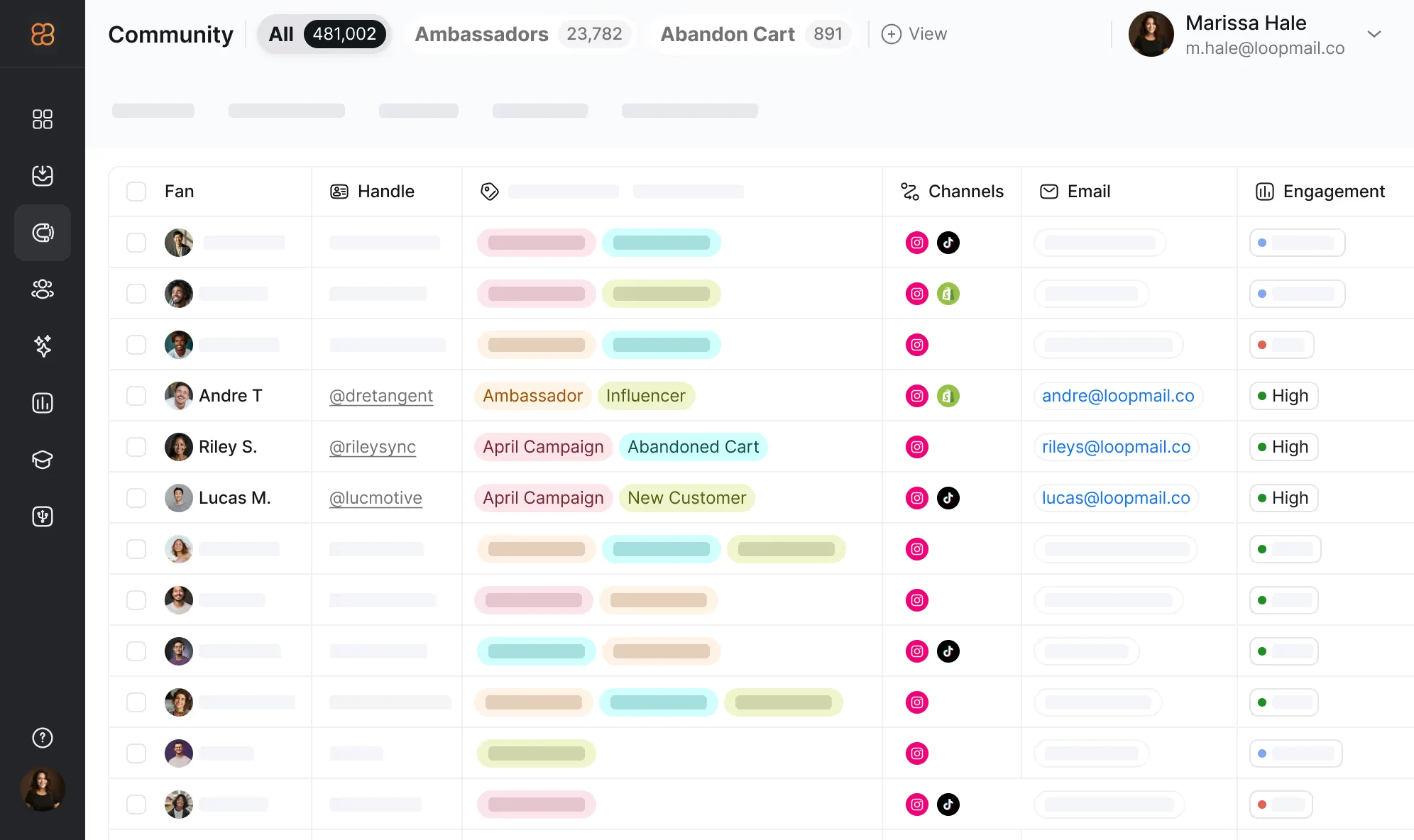
Nectar’s product materials describe multimodal listening across text, video, and audio, alongside sentiment, product feedback, competitor tracking, and creator signals. Its community hub is designed to organize people and interactions that would otherwise sit in spreadsheets. Nectar also says it has official data partnerships with Meta, TikTok, LinkedIn, Reddit, and X.
I would not read those partnerships as a promise of complete access to every conversation. Buyers need a platform-by-platform explanation of available surfaces, historical coverage, refresh rates, and missing data.
The interesting use case is a brand operator asking: are people confused about the product, unhappy with delivery, or repeating something a creator said? Each answer calls for different work. A sentiment score alone cannot make that decision.
Creator teams could use the same evidence to distinguish a large audience from a useful relationship. A post that generates informed questions may deserve a closer look even if another earns more views. Still, finding that signal is only the start of managing a partnership. Check what happens when someone must approve a brief, track a deliverable, or clear usage rights.
Social commerce: attribution is the part to interrogate
Nectar’s product overview describes conversion tracking, purchase analytics, product recommendations, and integrations including Klaviyo and Attentive. The commercial idea is clear: a question before purchase is an opportunity to help someone make a decision, and the business should be able to see what followed.
The strongest concrete example I found is Nectar’s Portland Leather Goods case study. Nectar reports that the brand handled more than 70,000 monthly social engagements, increased its response rate from 40% to over 90% in four months, and reduced average response time from six hours to under an hour. It also reports 40 weekly hours of moderation work saved and $10.2 million attributed to social in under a year.
More conversations covered.
A clearer revenue signal.
Company-reported results from Nectar’s case study. Attributed revenue is not a measure of incremental revenue caused by Nectar.
Those are company-published results, not independently audited findings. The case study does not establish how much additional revenue Nectar caused. A sale can be attributed to an interaction even when the customer would have bought anyway.
Before treating the number as a business case, ask about the attribution window, identity matching, repeat buyers, returns, and overlap with paid campaigns. Keep earned media value separate from sales. Then ask whether a holdout or staged rollout can help estimate incremental lift.
The practical goal is to learn which conversations deserve attention. Giving social a revenue number is useful only if the team understands what that number means.
The intelligence can leave the dashboard.
- Marketer opens Nectar
- Finds and compares the data
- Interprets it for the task
- Marketer asks an AI assistant
- Assistant queries authorized Nectar data
- Context returns inside the assistant’s workflow
Schematic workflow, not a product screenshot. Client compatibility and workspace permissions still apply.
Nectar MCP: the dashboard becomes optional
Nectar announced Nectar MCP on September 2, 2026. Model Context Protocol gives a compatible AI assistant a standard way to request information from another system. Here, it lets the assistant retrieve data from a Nectar workspace instead of asking a marketer to paste exports into a chat.
The announcement describes 16 read-only tools covering owned content, account performance, community mentions and sentiment, competitor analysis, and the workspace information needed to filter requests. It says access uses OAuth and the release is available on Nectar’s Premium tier.
Nectar Agent and Nectar MCP have different jobs
Agent: Nectar’s own AI experience and workflows inside the product.
MCP: a connection that lets an external assistant read a scoped set of Nectar data. It cannot currently post, reply, or change the workspace.
Nectar’s MCP product page demonstrates Claude and describes access for internal agents. It explicitly places publishing, replies, DMs, creator search, and trends on the roadmap rather than in this release. It also describes administrator visibility and revocation per user and app.
For a team using ChatGPT or another assistant, compatibility needs to be checked against that client’s connector and authorization support. Nectar’s public walkthrough centers on Claude; I would not promise identical setup or availability in every assistant.
What a marketer could do with that connection
Consider preparing a launch retrospective. You could ask a connected assistant to retrieve recent community discussion, compare it with the brand’s own posts, and draft questions for the next planning meeting. If the assistant separately has approved access to the launch brief, it could help compare the intended message with the response.
That last step is a proposed workflow, not a claim that Nectar MCP itself accesses your documents. The value comes from bringing authorized context together in the place a marketer is already thinking.
This makes the infrastructure ambition more credible. Nectar could organize the social data while another interface becomes where a person asks questions. It would remain valuable even when the marketer spends less time in its dashboard.
There is a tradeoff. Read-only access limits actions, but the assistant can still receive business data. Agencies should check workspace boundaries, staff permissions, retention, and the external AI provider’s data terms. An answer should also lead back to the underlying posts. A fluent explanation of why a campaign worked is still an interpretation.
Nectar Social pricing and who should consider it
I found no public dollar pricing in the official pages reviewed. Nectar’s MCP FAQ directs buyers to a pricing call, while its launch announcement names Premium eligibility. Ask for a written quote that distinguishes the core platform, Agent usage, listening coverage, workspaces, onboarding, and MCP access.
The strongest fit appears to be a consumer brand with enough conversation volume that missed responses and repeated handoffs are already expensive. DTC and ecommerce teams have an especially clear evaluation path because many social questions sit close to a purchase or service need.
Multi-brand operators and agencies may also benefit if reporting and permissions work cleanly across accounts. Startup GTM teams should start with their actual bottleneck. If customer questions are scattered and nobody owns follow-up, a coordinated system may help. If the problem is that too few people care about the product yet, more sophisticated inbox operations will not create that demand.
For a solo creator or a small business scheduling a few posts and handling a manageable inbox, this may be overkill. Consider the time needed to configure policies, train reviewers, and maintain integrations alongside the subscription. Consolidation is worthwhile when the work removed exceeds the administration introduced.
When conversations
outgrow the team.
- Brands with substantial inbound social volume
- DTC and ecommerce customer journeys
- Community teams working across channels
- Creator-heavy brands managing relationship context
- Teams investigating social’s revenue contribution
When the workflow
is still simple.
- Low inbound volume and a manageable inbox
- A primary need for basic post scheduling
- Too little social or customer data to justify the setup
Fit depends on the pilot, implementation effort, and quote.
What I would ask a team to prove before buying
Bring a small, representative set of historical conversations to a demo, with sensitive information removed. Include routine questions, an angry customer, ambiguous intent, an untagged mention, and a creator inquiry. Ask the team to follow each one through the proposed workflow.
- Coverage: Which exact channels and surfaces will we see? What will be missing, delayed, or unavailable historically?
- Judgment: Can we restrict automation by topic and channel, require review, inspect decisions, and stop it quickly?
- Handoffs: Does the receiving person get the source conversation and a clear owner? How do we know the issue was resolved?
- Measurement: Can we reconcile reported revenue with our own records and distinguish attribution from additional sales?
- Cost and exit: What changes the bill, who maintains the setup, and what can we export if we leave?
Agree on success before the pilot: useful response coverage, time to human escalation, correction rate, reviewer time, and a clearly defined commercial outcome where relevant. Compare those with the current process. A high automation percentage is not enough if customers need to ask twice.
My judgment: the category claim has to be earned in the handoffs
Nectar is a compelling example of social software moving toward coordinated operations. Its combination of community intelligence, action, and commerce gives the operating-system positioning a practical basis. MCP extends that logic beyond the interface.
I would still call it an ambitious combination of existing categories before calling it a proven new category. The difference will show up in daily work: whether teams can share context, delegate bounded decisions, handle exceptions, and trust the measurement without rebuilding the missing connections themselves.
That is what I would buy, if the pilot demonstrated it. A better-written reply is a small improvement. A customer question that reaches the right answer, the right person, and a useful business decision is a reason to change the stack.
Sources are linked beside the relevant claims. Product capabilities and customer outcomes are attributed to Nectar; workflow examples and buying criteria are my analysis. Editorial policy.