THE WEBSITE HAS A STOCKROOM
Change the
showroom.
Keep the facts.
Ekho AI Website lets vehicle dealers change their storefront by asking. Its more interesting idea is what the page editor cannot change: the inventory price and disclosures behind the offer.
A fresh homepage is useful. A fresh homepage advertising a vehicle that has already sold is a different kind of work for your team.
By Stephen Stilwell
Independent analysis of public sources. No dealer account, authenticated edit or purchase was tested.
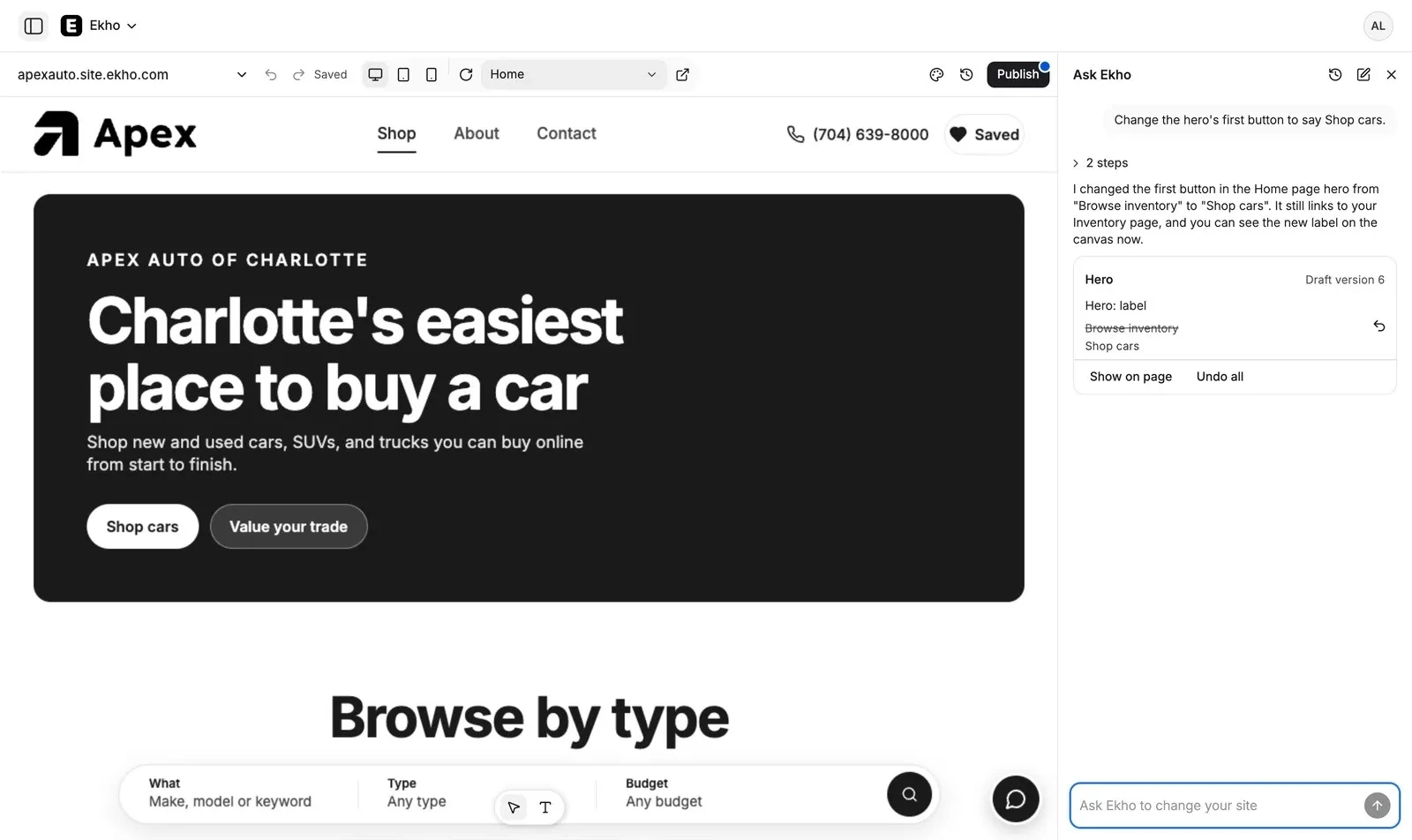
A NEW FRONT DOOR
A dealer should be able to move the furniture.
Ekho announced AI Website on November 18, 2026. It is onboarding its first automotive and powersports dealers by hand, starting with existing Ekho stores. This is an early rollout, with a demo-led entry point.
The company is broader than a website builder. YC lists Ekho in Summer 2022 and describes its vehicle-commerce platform. The new website puts a merchant-controlled storefront on that business infrastructure.
Picture a dealership marketing manager who wants the latest used trucks closer to the top of the homepage. Today that request may become a ticket, a manual collection or a banner with a price typed into it. The work repeats when stock changes. Ekho’s opportunity is to make merchandising easier without creating another copy of the commercial data.
Describe the change.
The builder page describes plain-language editing alongside inventory merchandising. The launch shows Ask Ekho returning an undoable change card on a draft.
Inspect the result.
The launch also describes saved versions you can preview or restore. That gives a reviewer a way back. It does not establish that the requested change was the right one.
Know who can publish.
Ekho describes separate viewing, draft-editing, publishing and ownership roles. A useful evaluation should include the person who approves the site, alongside the person requesting changes.
FOLLOW THE DATA
The page can change.
The offer has an owner.
The Inventory CMS is described as the central place for listings, prices, photos and descriptions, with DMS and inventory-feed synchronization. That is a different job from writing homepage copy.
This distinction matters when an attractive request hides an operational change. “Feature our newest trucks” changes presentation. “Make this truck cheaper” changes the offer. “Keep this sold truck in the collection” changes what the page says is available. A sentence can contain all three, but they should not acquire the same authority.
What the dealer wants visitors to notice.
The source to check before the page makes an offer.
What is actually going live, including any held-back changes.
Original explanatory diagram. A review framework, not Ekho’s technical architecture.
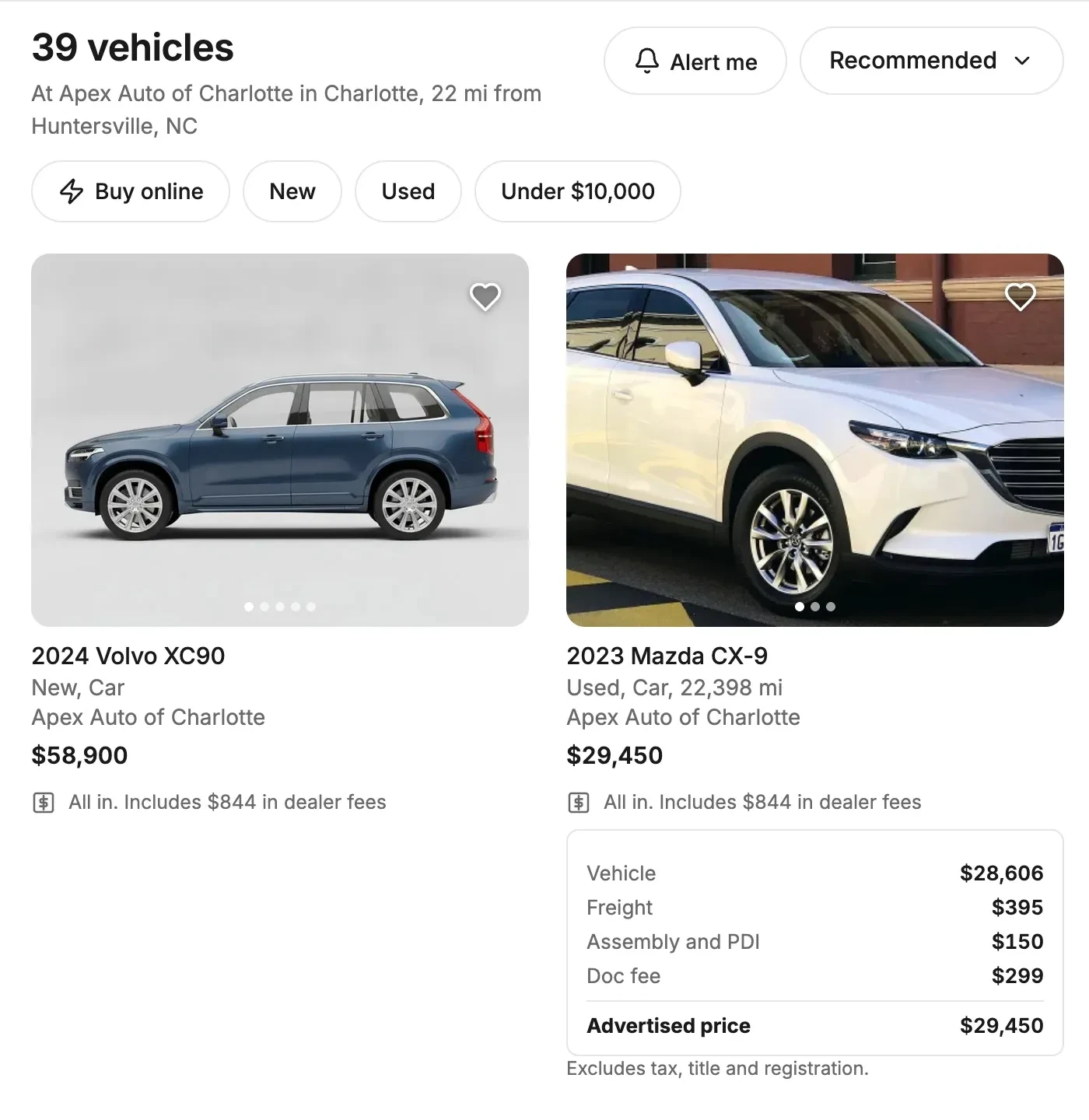
ONE VEHICLE, SEVERAL SURFACES
Start with identity.
Then compare the offer.
Ekho’s website overview says vehicle cards and detail pages use the same live data, with protected price and disclosure components. Treat that as a vendor claim to evaluate.
For a demo, choose one identifiable unit. Follow it from a homepage collection into search and then its detail page. Check the stock identifier, availability and advertised-price breakdown on each surface. A matching headline price is insufficient if the card points to the wrong unit.
Then ask the operator to change its availability through the proper inventory workflow. A refresh test should ask what disappears, what remains in saved links and what explanation the shopper receives. Do not mark a vehicle sold in a real account just to try the software.
AN ORIGINAL WORKING AID
Give the request
a place to land.
Build a change brief for a vendor-led demo. Choose the merchandising request and the data event you want explained. The brief separates page work from the commercial record.
Local planning tool by Useful in Practice. No Ekho connection, vehicle search, policy evaluation or live edit. Examples are authored suggestions.
No identifying business data needed. Select a scenario, then copy the brief.
Open the review worksheetTHE DEMO BRIEF
Feature the newest available trucks
Page request
Use a collection based on current inventory. Ask the vendor to explain how “newest” is defined and ordered.
Data event
Use a safe sample vehicle that becomes sold. Show the inventory update and when the website receives it.
Acceptance evidence
Compare the same unit on the homepage, in search and on its detail page. Record its identifier, status and price. Explain the sold-link behavior and any delay.
Release question
Which page changes are live, which are still draft, and which were held back? Keep the approved commercial record separate from the wording request.
A CHECK IS PART OF THE CONVERSATION
What went live?
What stayed behind?
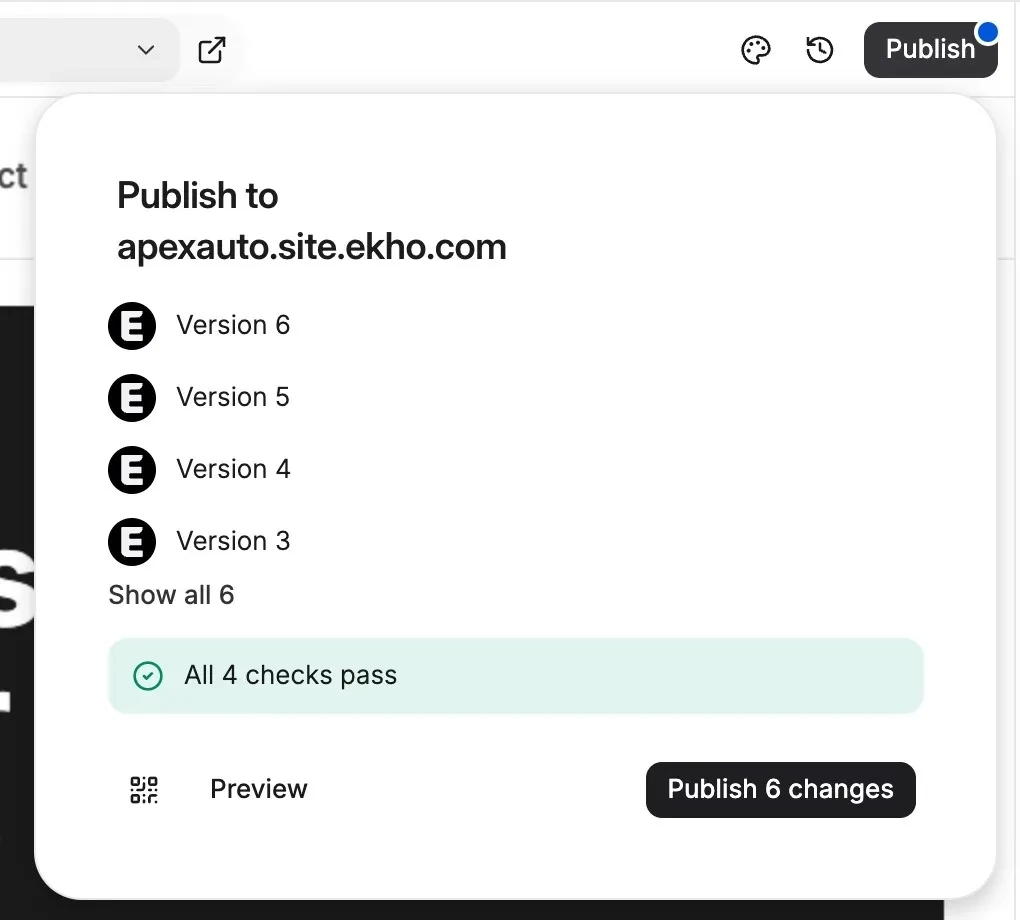
The public product demonstration shows a publish flow that can hold a problematic change while allowing others through. That is more nuanced than treating a request as one indivisible release.
A campaign may be technically publishable while still being editorially incomplete. If the revised heading goes live but its image is held back, does the old image still support the message? Review the resulting page, not just the count of successful changes.
Ekho’s launch describes pricing and accessibility checks. Those are useful controls to investigate, not an independent compliance certification or a guarantee that copy cannot mislead. Ask which checks cover your exact manufacturer program and vehicle type.
THE USEFUL IN PRACTICE TAKE
Evaluate the connection,
not just the canvas.
The right reader is a dealer or dealer-group team whose recurring website work depends on stock, promotions and an approval chain. A general-purpose site builder may be sufficient for a static brochure. A vehicle storefront has to keep making accurate offers after the layout is finished.
Ekho’s specialization could reduce the work of reconnecting a new page to the business. It also concentrates responsibility in the platform and its integrations. The integration page describes a dealer-set synchronization schedule for Blackpurl and notes that bidirectional capability and cost vary by vendor. Live rendering from Ekho does not prove instant freshness from every upstream system. Ask about the actual feed, failure visibility and recovery process.
The current pricing page lists AI Website as custom quoted for one rooftop. Get an explicit scope for migration, integrations, the relevant Ekho products and ongoing support.
My evaluation would start with one collection and one inventory event. Keep the product if the manager can make a useful change and the reviewer can explain how the resulting offer stayed correct. If the team cannot identify where a stale vehicle or wrong price should be corrected, a faster editor has left the harder problem unresolved.
What about migration and search?
Ask for an old-to-new URL map, representative redirect checks and a rollback plan before moving a domain. Treat vendor search-readability claims as infrastructure to verify, not a promise of rankings or AI recommendations.
What about an agency or connected AI tool?
Ask to see its actual role, the draft it changed and who can publish. An agency’s ability to request a change should not silently become authority to alter the commercial record.
What would this article’s next test establish?
A bounded dealer-approved demo could examine one change and its data path. It would not establish sales lift, every manufacturer’s requirements or reliable behavior across every inventory integration.
Independent coverage. No authenticated use, lead submission, financing application, purchase, paid service or dealer-site change performed. No affiliate relationship. For another angle on building storefronts, see the Useful Block build story; that personal experiment did not evaluate dealer inventory operations.
SOURCES & METHOD
Follow the offer
back to its source.
Published November 27, 2026. Primary sources accessed that date. Product capabilities below are vendor descriptions and demonstrations. The change desk, diagram and proposed evaluation are original editorial work.
- Ekho launch announcement, November 18, 2026: rollout, editor, versions and official images.
- AI Website overview: public demonstrations, protected components and publishing behavior.
- AI Website Builder and Inventory CMS: editing and data responsibilities.
- Integrations and pricing: current integration caveats and custom-quote scope.
- Y Combinator directory: Summer 2022 affiliation.
Three local WebP images retain the official compositions. Demo dealerships, vehicles and displayed figures are Ekho’s illustrations, not customer evidence or measured results.