
ArvowAn SEO workflow needs an editor.
Research, draft, edit, publish, measure. Arvow brings those jobs closer together. The useful question is where it saves work, and where your judgement still belongs.
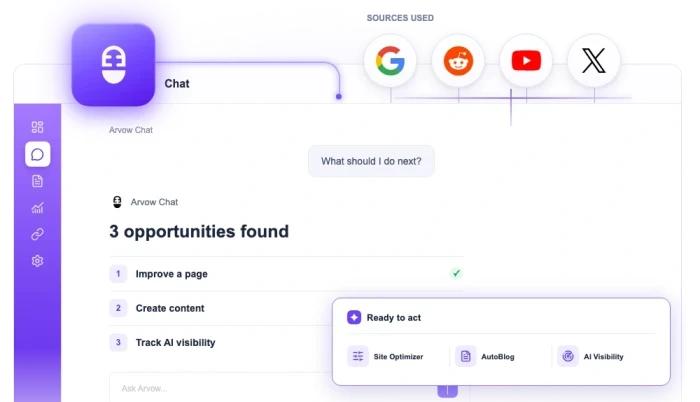
An AI SEO platform spanning content creation, publishing, site optimization, and AI visibility tracking.
Content teams, agencies, and site owners with repeatable publishing work and someone accountable for quality.
Can it reduce the work per useful page while preserving the evidence, voice, and publishing control you need?
From a writing tool to a publishing operation.
Arvow’s public product lineup includes an article writer, an AI editor, AutoBlog, an SEO agent, project-aware chat, and a monitor for brand visibility in AI answers. Its proposition is to connect more of the work that normally sits across separate tools. Product overview ↗
My interest is the handoff between those jobs. A draft is only one part of getting a useful page online. Someone still needs to select a worthwhile question, supply reliable information, check the result, and decide what a reader should do next. A connected workflow could remove repetitive copying and scheduling while keeping those decisions visible.
For a small team, that distinction matters. Saving thirty minutes on a draft is less compelling if the page then takes an hour to fact-check or repair in the CMS. The unit worth optimizing is the finished, maintained page.
Give the automation a good brief.
This is a proposed editorial workflow, rather than a report of a live Arvow test.
- 01 / ChooseOne reader questionPick a specific buyer problem, its intended audience, and a useful next step.
- 02 / SupplyFirst-party contextProvide product facts, examples, screenshots, and the claims you can support.
- 03 / ReviewA publishable pageCheck accuracy, structure, links, mobile layout, and the call to action.
- 04 / LearnUseful outcomesTrack relevant visits, signups, inquiries, and the effort needed to maintain it.
Start with the information only you have.
Arvow’s Knowledge Base documentation describes support for websites, PDFs, plain text, and YouTube material. It distinguishes durable brand details in Website & Brand from supporting assets in the project knowledge base. Knowledge Base documentation ↗
I would use that supporting material for the parts a generic article cannot supply: the actual onboarding sequence, a real customer question, a product limitation, or a screenshot that explains a decision. Before adding anything, remove material you lack permission to reuse and label facts that need regular updates.
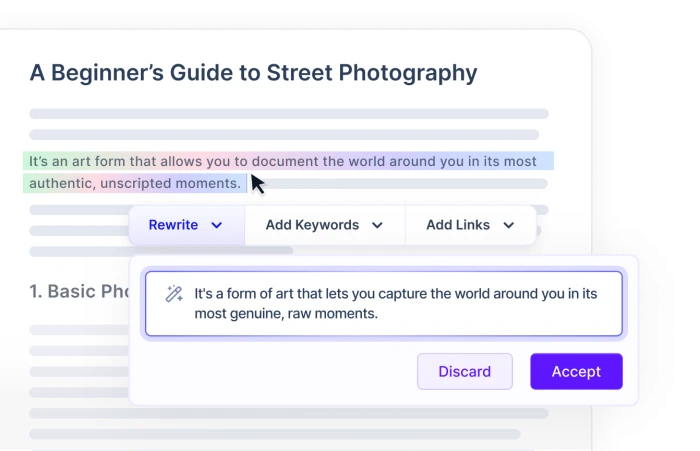
Review is part of the workflow.
Work at the right level.
The editor guide describes manual changes, commands applied to selected text, and an assistant that proposes edits. It also describes revisions and individual approval or rejection of suggestions.
Choose the release pace.
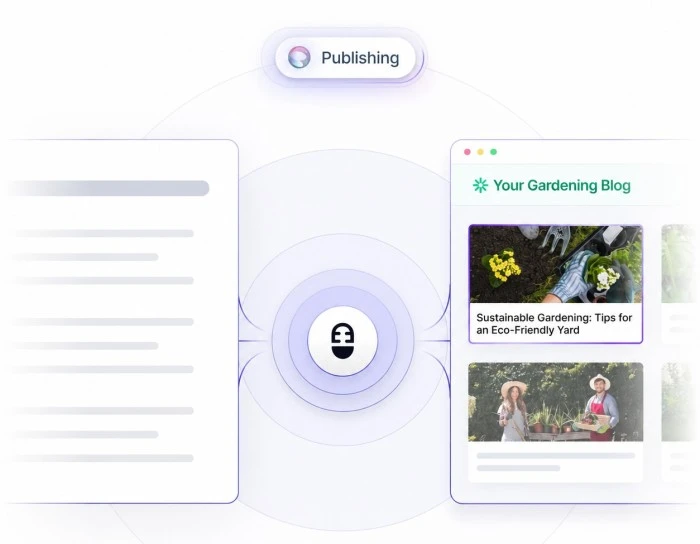
The AutoBlog page describes feeds from keywords, RSS, news, or YouTube, with manual execution or scheduled publishing. Arvow says articles can be reviewed before publication.
Inspect the live result.
My acceptance check would include the title, heading order, source links, image placement, canonical URL, and the signup or inquiry path after publishing to the actual destination.
Those controls need to work in your specific setup. I would publish one low-risk draft to a staging or draft destination first, then inspect the page on a phone and desktop. A formatting problem that is small on one page becomes expensive when repeated across a large batch.
Publishing and visibility are different jobs.
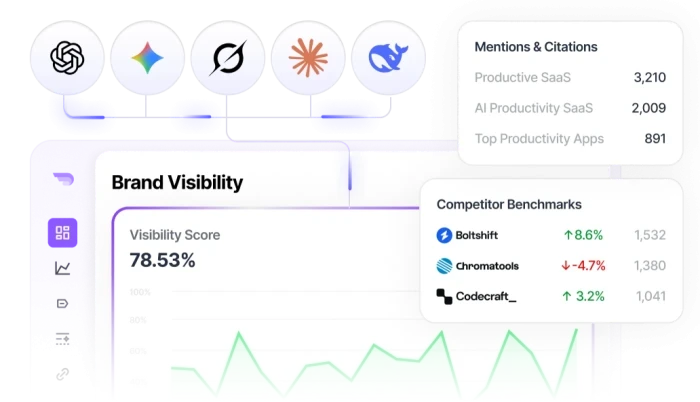
The LLM Brand Monitor guide describes tracking mentions and sentiment across ChatGPT, Claude, Gemini, Perplexity, and Grok. It lets users inspect individual answers and see whether a website citation appeared. Monitor documentation ↗
My measurement rule would separate a brand mention, a citation, a referral visit, and a qualified inquiry. Each answers a different question. A mention shows presence in a sampled answer; an inquiry shows that someone took a useful next step. Keep the tracked prompts stable enough to compare runs, and record the exact wording and date.
A dashboard can help identify questions worth investigating. It does not establish that an article caused a change, or that every person asking a similar question will receive the same answer.
Three pages. One topic. A real baseline.
For a SaaS business, I would choose three related pages: an explanation of a customer problem, a setup guide, and a comparison that helps a buyer choose. Give each a different job. Record its starting traffic, relevant queries, conversions, and editing effort before changing anything.
| Checkpoint | What to record | A useful signal |
|---|---|---|
| Content quality | Unsupported claims, missing examples, and substantial rewrites. | The draft preserves the supplied facts and adds a clear, usable explanation. |
| Production effort | Briefing, review, CMS cleanup, and later corrections. | Total work falls without lowering the editorial standard. |
| Search relevance | Which queries and landing pages bring visitors. | The audience matches the customer problem the page was built to answer. |
| Business value | Signups, product exploration, and qualified inquiries. | Readers reach a meaningful next step, with attribution limits recorded. |
The content moat is your source material.
My GTM recommendation: build a small library of real demos, objections, customer language, and useful comparisons. Give the writing system better ingredients. A publishing calendar is easier to fill when every article has a distinct reason to exist.
When I would shortlist Arvow.
A plausible fit
You maintain a recurring content program, own useful source material, and spend too much time moving drafts through tools. An agency could also evaluate whether a shared workflow improves consistency across projects while preserving each client’s voice.
A reason to pause
Your audience, offer, or content strategy is still unclear. In that situation, I would first write a few strong pages manually and learn which questions customers actually ask. Automation will have a clearer job afterward.
Price the actual workflow.
Arvow lists credit-based plans with different website limits and feature access. Check the current billing period, included modules, credit consumption, and renewal terms on its pricing page.
My cost comparison would include the subscription plus briefing, editing, publishing cleanup, and maintenance. Ask for an estimate using your expected article volume and tracking workload. A low cost per generated draft can hide a high cost per approved page.
Before starting the trial.
Use these as decisions for your team and questions for the vendor.
Questions readers ask.
Is Arvow just an AI writer?
Its public offering extends into editing, scheduled publishing, SEO work, and AI visibility monitoring. Check which parts are included in the plan you are considering, rather than assuming the entire lineup is bundled.
Can I review articles before they go live?
Arvow’s AutoBlog page describes a review option. Its editor documentation also describes revisions and edit approval. Verify the exact behavior for your CMS and automation settings during a small trial.
Will using it guarantee rankings or AI recommendations?
This Field Note does not establish a performance guarantee. Evaluate the quality of the pages you publish and the outcomes you can observe. Treat vendor results as vendor examples, rather than a forecast for your website.
Automate the repetition. Give the editor room to work.
Arvow is worth a closer look when your content operation already knows what good work looks like. The compelling trial is a small, well-sourced publishing workflow with visible review points and a measurable reduction in total effort.
I would keep the first batch small, inspect every published page, and expand only when the output earns it. For a different SEO research angle, read the OpenSEO Field Note.
Sources & editorial context
Based on public product information checked October 26, 2026. Product images are official Arvow marketing assets. This is an independent product analysis, without a firsthand account test or independently measured traffic results. The proposed pilot and recommendations are my analysis. No paid placement or affiliate relationship is represented here.
Make your product easier to understand.
I create practical software stories, product demos, and content for AI and SaaS teams.