INDEPENDENT PRODUCT STUDY / YC FALL 2026
The right music.
At the right moment.
Taan generates original music for your video, then lets you direct when it changes. The interesting question: can a soundtrack survive the next edit?
By Stephen Stilwell
Documentation-led analysis · November 4, 2026
Move the entrance.
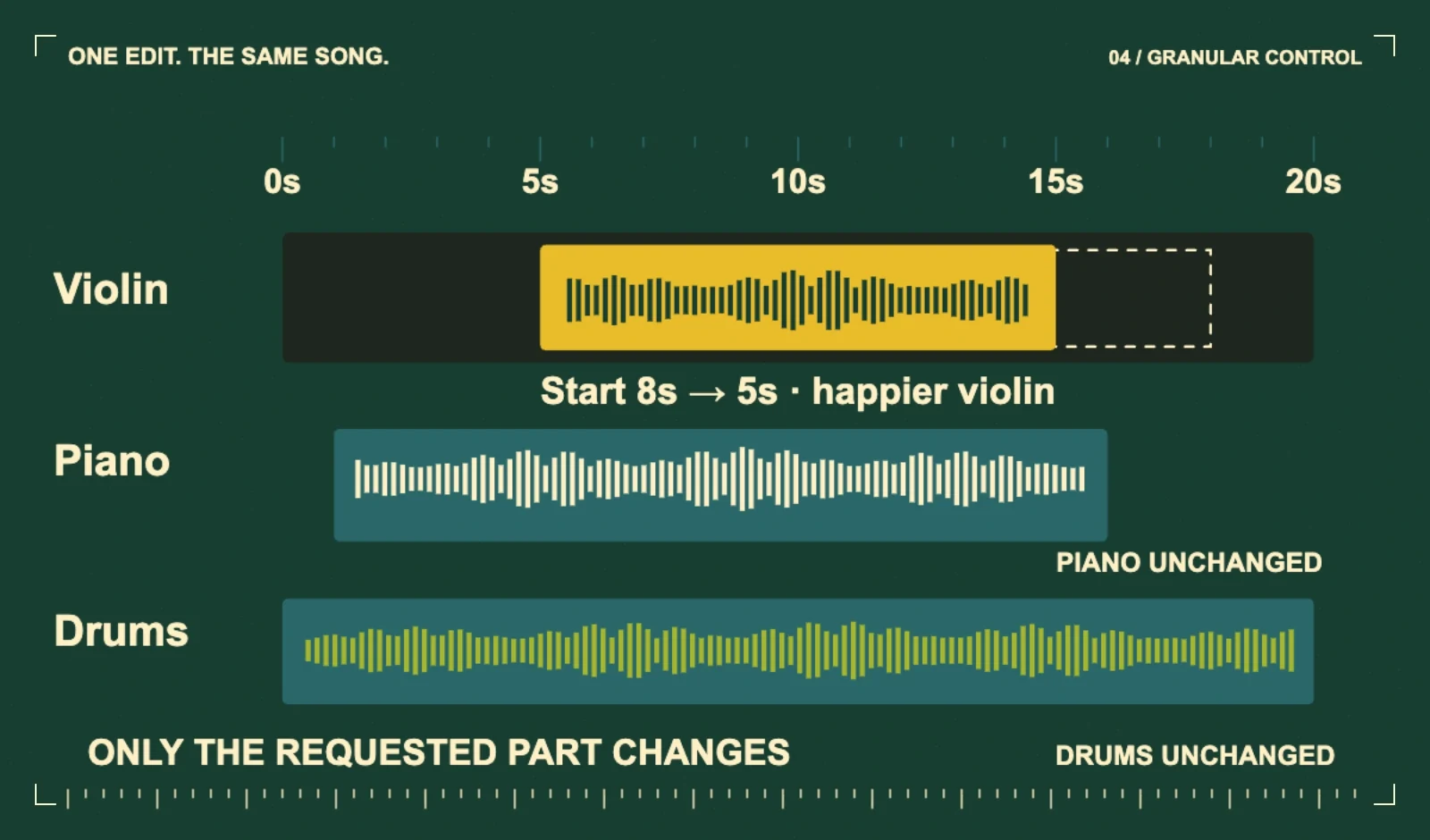
A local correction should stay local.

01 / A SCORE HAS A JOB
A beautiful track can
still miss the scene.
A product demo reaches its reveal. The music is still building. You can move the cut, move the track, or accept a moment that never quite lands. That is a different problem from finding a song with the right mood.
Taan’s proposition is music composed around picture: supply a video, script or audio reference, and direct the score with language. Its public site emphasizes timed changes and targeted revisions. The company appears in Y Combinator’s Fall 2026 directory. This Field Note examines the current product and its published August 2026 timing research.
The useful audience is specific: video editors, small creative teams and developers building scoring into video tools. If your recurring pain is a cue arriving after the reveal, Taan is worth a controlled trial. If you need an established musical identity, exact orchestration or a musician’s judgment, a generator alone will not resolve the brief.
Scope of this review: official product media, current documentation and company-published research. We did not create music in an authenticated Taan account or evaluate its audio by ear. The tools below organize an editorial brief locally; they do not call Taan.
02 / FROM MATERIAL TO DIRECTION
Three controls.
One finished scene.
Explore Taan’s own demonstration graphics. Each makes a different promise. Each deserves a different acceptance test.
Give the composer the scene.
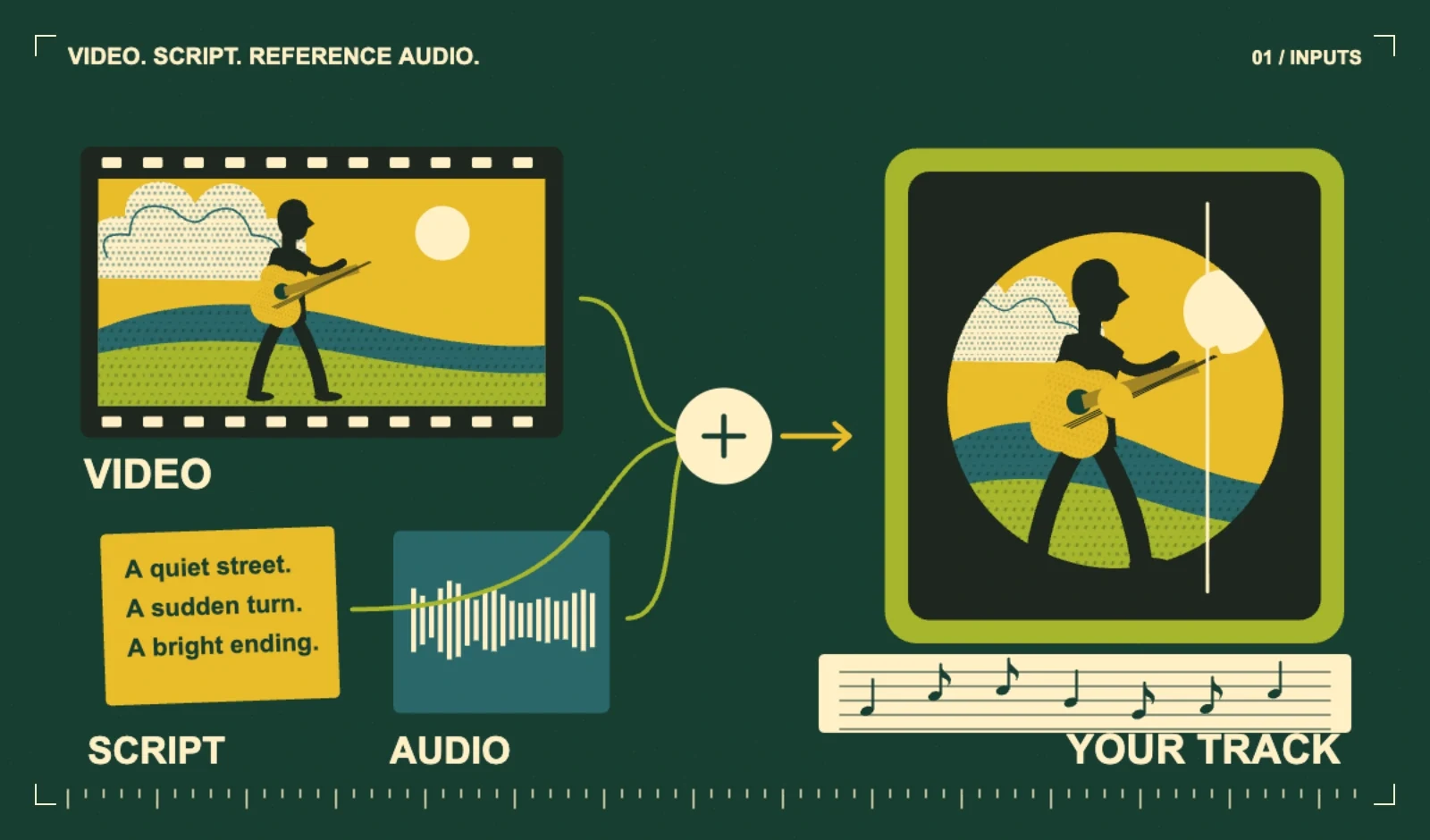
A video supplies pacing; a script explains intent; an audio reference suggests direction. Taan advertises combined inputs. The test is whether it follows the scene’s important transitions, rather than merely matching a broad mood.
Company media illustrates the offering. It is not evidence that our proposed workflow has passed.

Tell it what the cut means.
A screen recording cannot explain that a blank state is intentional. Add the narrative: this is the pause before the result, not a failure to load. A reference should guide feel, not request someone else’s melody.
Preserve what works.
Taan advertises changes to individual instruments and timings. The practical value depends on what remains unchanged. Listen beyond the corrected entrance for altered harmony, balance or ending. A successful fix must not create another edit.
Keep control in your editor.
The homepage lists separate stems alongside MP3 and WAV. Treat stems as a finishing option: lower an intrusive part, retain a useful texture, or mix around narration. Verify the actual delivered stem set before promising a client that flexibility.
THE RESEARCH LENS
Timing is measurable.
Taste is still yours.
Taan’s August TimingBench paper separates a musical event happening at the requested time from a track sounding broadly appropriate. It uses prescribed prompts and signal-processing detectors, with rejection checks intended to prevent accidental activity from earning credit. Instrument identity and event timing are distinct questions. The paper describes a larger independently labelled validation set as work in progress.
The company’s control benchmark reports a large timing advantage over the systems it evaluated. It also acknowledges a fidelity tradeoff. These are vendor-run results on specified tasks, not independent proof that Taan produces the best soundtrack, or that today’s versions of every competing model would rank the same way.
The useful lesson is a testing method: mark the important moments before generating. Then judge timing, musical quality and revision stability separately. A score that hits every cue but distracts from the speaker has still failed the scene.
03 / YOUR EDIT, WRITTEN AS MUSIC
Make the brief
audible on paper.
An illustrative 30-second product reveal. Move the reveal cue and build a brief you can use in a real trial. No audio is generated. These timings are authored assumptions, not measured Taan output.
Original cue diagram. Bars show intended arrangement, not a waveform or product interface.
Listen for masking under consonants and important product names. Timing alone cannot establish intelligibility.
Create a 30-second instrumental score for a product reveal. Use a restrained piano bed. No percussion before 12 seconds; bring it in at 12 seconds for the reveal. Leave room for narration throughout. End gently at 30 seconds. Before generation, show the estimated credit cost.
The second request is the real test.
After the first version, ask for the entrance two seconds earlier while keeping the rest of the arrangement and total length intact. Save both versions. If the correction changes the ending or undermines the voiceover, that matters as much as whether the cue moved. Keep the evaluation small enough that you can listen closely.
04 / THE LAST MILE
The export can
change the workflow.
A soundtrack is only finished when it reaches the edit safely. Choose a route to see the documented handoff and the work still left to you.
Ask for the format before it composes.
Taan’s MCP guide says music defaults to MP3; request WAV before generation or refinement. Connecting an assistant grants access to update Taan projects, and generation or refinement spends credits. Ask for an estimate first. An assistant connection is a permission and budget decision, not just a new chat command.
Keep your original sound.
The MCP guide says exported MP4s contain the generated soundtrack but exclude the original audio. A narrator, interview or location sound may therefore need to be remixed in your editor. Do not assume “video export” means a finished dialogue mix.
A sensible first workflow
- Lock a short cut. Use material you have permission to upload. Write down its reveal, pauses and ending before choosing a style.
- Generate one candidate. Include the narration requirement, cue times and desired output format. Check the estimated cost; do not treat retries as free.
- Review against picture. Save the version, listen at normal playback, and check the musical turn at the cut. A pleasant standalone track is not the acceptance criterion.
- Request one local change. Compare the corrected cue and the supposedly untouched sections. Then export music for the final mix, preserving your original audio.
The awkward details are useful.
The MCP guide documents music lengths from 10 to 240 seconds and fixed-length revisions. Video sets the duration. It lists a 250 MiB video upload limit, while the homepage advertises 500 MB uploads. These are different stated limits, potentially for different routes. Verify the route you plan to use before delivering a large file.
For a revised edit with a new length, do not assume a refinement will stretch the score correctly. Decide whether to start a new composition or return to a manual edit. Preserve project and version identifiers so a timeout does not turn into a duplicate job.
The API reference describes an asynchronous project workflow: declare inputs, upload files, signal completion, check readiness and execution, then download a completed version. Its first composition is WAV. That differs from the MCP default. A video product needs status, errors and recovery around generation, not a button that assumes an immediate file.
THE COMMERCIAL READ
Budget for
the revisions.
Homepage prices checked November 4, 2026. Confirm current terms before purchase.
25 minutes · 15,000 credits
60 minutes · 36,000 credits
The advertised allowance is not a guarantee of finished, approved minutes. A rejected cue and several revisions can change the economics. Evaluate cost per usable delivery in your own trial, including the human time spent listening and mixing.
Taan advertises commercial rights and licensed training music. Those are company claims, not our legal verification. Before client work, check the actual license for your distribution, paid advertising, client handoff and continued use after cancellation. Rights to an uploaded reference are a separate question.
Read Taan’s current plans ↗05 / THE DECISION
Try it on the cut
you keep rescoring.
Explore Taan ↗Independent coverage. No affiliate link.
My read: Taan is most interesting as a controllable scoring component, especially for short edits with a few important transitions. The meaningful promise is fewer compromises between the picture and the score. Its documentation gives that promise a concrete shape: versioned work, targeted changes and an export path.
That is enough to justify a focused evaluation, not enough to promise production reliability. We have not verified listening quality, revision consistency or commercial-license suitability firsthand. The company’s timing research addresses one part of the decision; your scene and your ears decide the rest.
Use it if the test is clear: “Can I move this entrance without losing the music I liked?” Keep a human finishing step if voice, brand character or client deliverables matter. Pass for now if you require a verified rights arrangement or exact musical control that the current documentation does not establish.
In our Yarn Field Note, the question was how to turn a product into a coherent video story. Taan addresses a narrower layer: what that story sounds like, moment by moment. A stronger video workflow needs both narrative direction and a mix that serves it.
SOURCE DESK / CHECKED NOVEMBER 4, 2026
What this note rests on.
All product visuals are Taan’s official public demonstration graphics, optimized locally and linked to their originals. Cue diagrams and the brief builder are original editorial explanations. No generated image, fabricated interface, firsthand performance claim or unsourced numerical chart is used.