ShieldCart · Caregiving technology
When checkout needs a second look.
ShieldCart gives family caregivers a chance to review online orders before they go through. I tried its public demo to see what that changes for the shopper and what it asks of the person on the other side.
See the checkout demos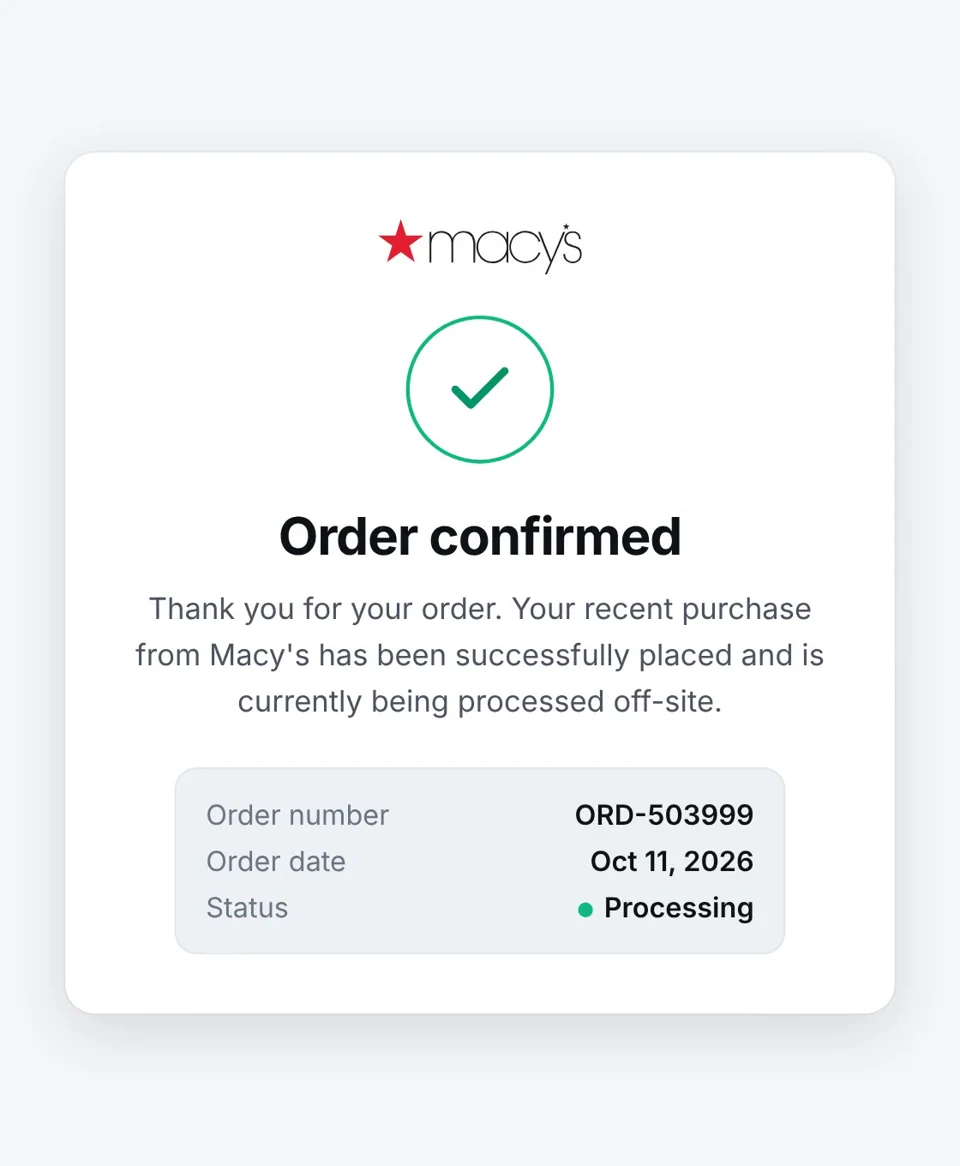
The founders
He still wanted to send gifts.
Hanna Miller’s father loved buying things for his grandchildren. As his dementia progressed, he would forget he had already placed an order and buy the same things again. Chasing the orders meant repeatedly intervening in something that gave him pleasure.
Miller and Nikki Elbaz built ShieldCart around a narrower intervention. Her father could still browse and choose what he wanted to give. The extension stepped in at checkout, where his family could decide whether to place the order. ShieldCart’s origin story makes the difference between buying a gift and losing the ability to choose one unusually clear. Read the founders’ account.
Elbaz previously led email at Copyhackers and now runs retention sprints for mature SaaS teams. In the LinkedIn material shared for this story, she describes how a familiar product can stop serving someone as their circumstances change. I see a similar question here. How much of a routine can the software preserve when one step has become difficult?

 Nikki Elbaz and Hanna Miller
Co-founders of ShieldCart. Photo from ShieldCart, with a supplied portrait of Elbaz inset.
Product footage
What each person sees.
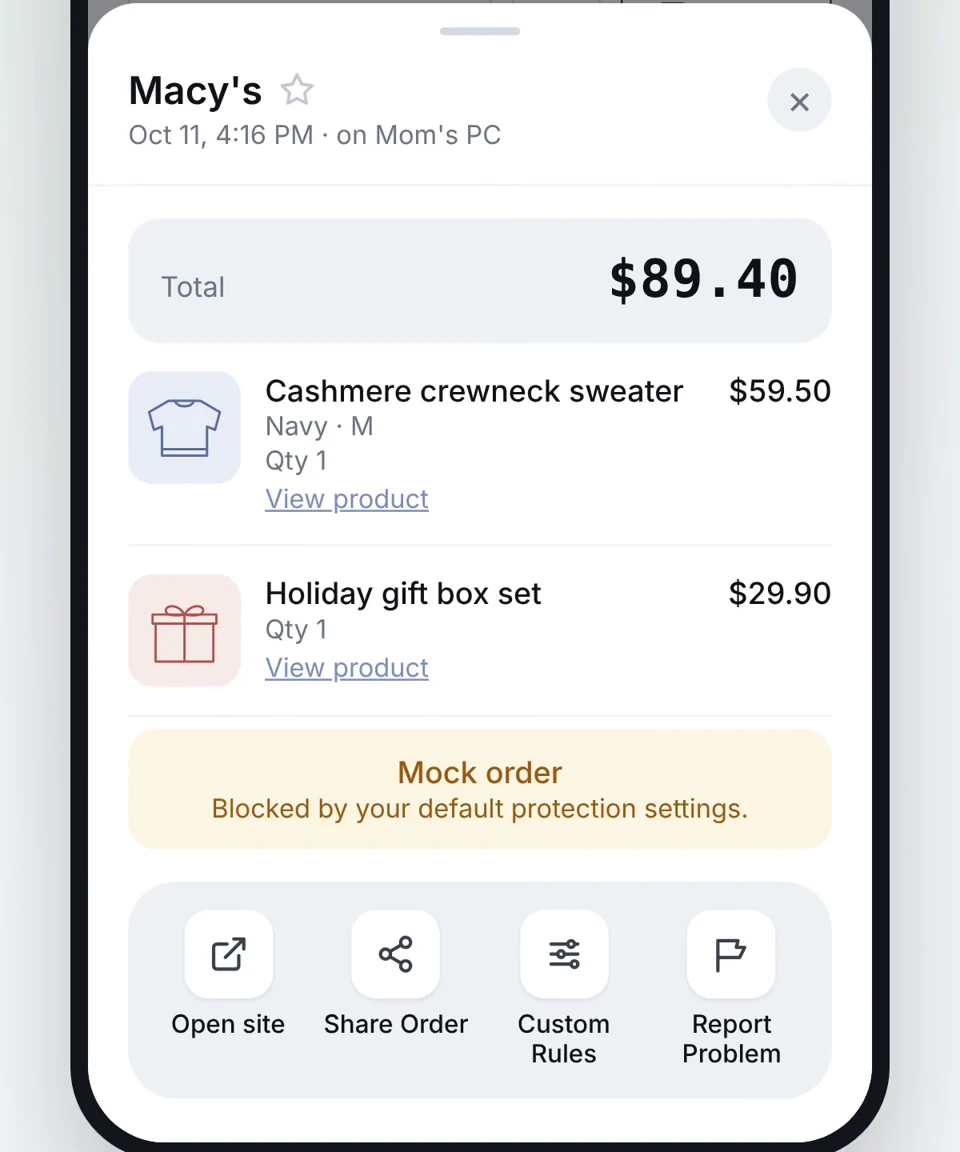
In ShieldCart’s public demo, I checked out in the simulated Macy’s store. When I switched to the caregiver view, the cart appeared as a mock order with its item, total and a cart screenshot. I could open the retailer from the order details.
Silent footage and frames from ShieldCart’s official demonstrations.
Try the public demoHow the settings differ
What happens to the same order?
Imagine a shopper is about to reorder a gift. Open each setting to see what happens at checkout and what, if anything, reaches the caregiver.
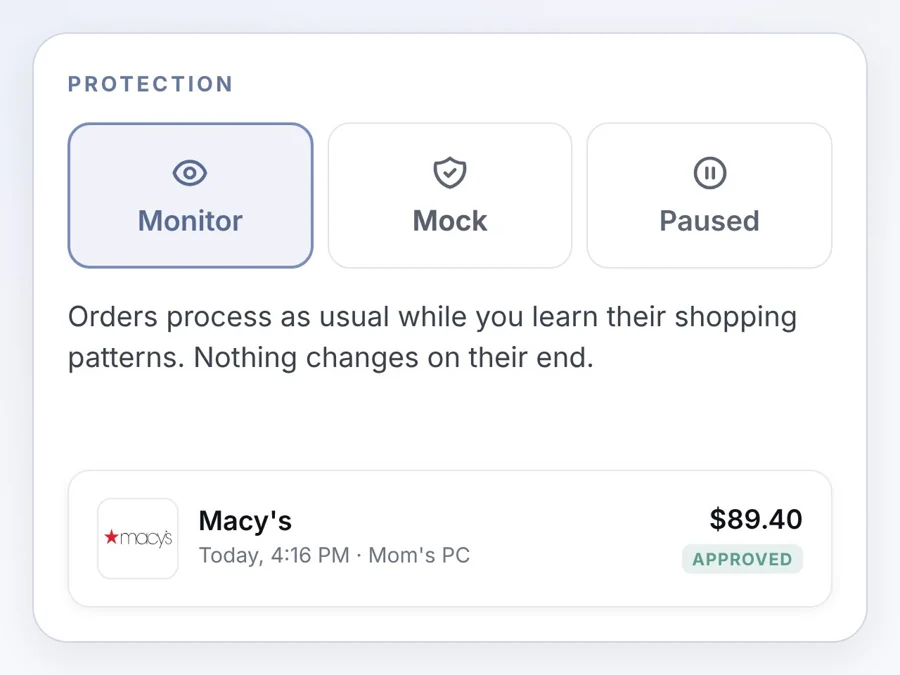
Monitor Order goes through
Shopper The retailer processes the order normally.
Caregiver The order appears in the dashboard for review after checkout.
Mock Order is intercepted
Shopper ShieldCart shows a simulated confirmation or error, depending on the settings.
Caregiver The cart appears in the dashboard. Any purchase the caregiver chooses to make happens separately at the retailer.
Paused Protection is off
Shopper Checkout proceeds as usual.
Caregiver ShieldCart pauses both monitoring and interception.
Opening a cart is still a handoff.
In Mock mode, the dashboard gives a caregiver a chance to act. ShieldCart says the caregiver may be able to use the original cart when signed in to the same retailer account. With a different account, they may need to rebuild it. A repeat gift can usually wait. A meal someone is expecting has a shorter window, and that puts the response time of the caregiver at the center of the workflow.
Where it fits
Start with the device and the handoff.
Where shopping happens
ShieldCart protects shopping in Chrome on a desktop or laptop. A caregiver can use the dashboard from a phone. If most purchases happen in native mobile apps or another browser, that leaves a gap in coverage.
Who can see an order
ShieldCart says it leaves payments to retailers. Its privacy policy says it collects the shopper’s name and shipping details, along with intercepted cart contents and a screenshot. If oversight is shared, who can view that information is part of the decision. Read ShieldCart’s privacy policy.
Who gets to decide
A simulated receipt tells a shopper that a purchase happened. That makes the feature powerful and raises the stakes of using it. ShieldCart’s pilot announcement asks families to confirm consent or power of attorney before installation. I’d want a clear answer about who is authorized to act, who reviews orders, and when the arrangement gets revisited. Read the pilot announcement.
What the pilot costs
ShieldCart lists a free pilot through December 31, 2026. It plans to charge $12.99 a month starting January 1, 2027, subject to change. The public demo is available without an account. Check the current terms on ShieldCart’s site.
My take
The place to intervene is a product decision.
Most online stores try to make it easier to go from wanting something to paying for it. ShieldCart is interesting because it leaves the part Hanna’s father valued in place and puts a review step at the point where money would change hands.
I’d judge it by a practical question. Can the person reviewing carts tell quickly which purchases need action and make sure the essentials still arrive? The public demo shows what information they would get. Answering the rest takes real use across the stores and devices a household actually relies on.
Explore ShieldCart’s demo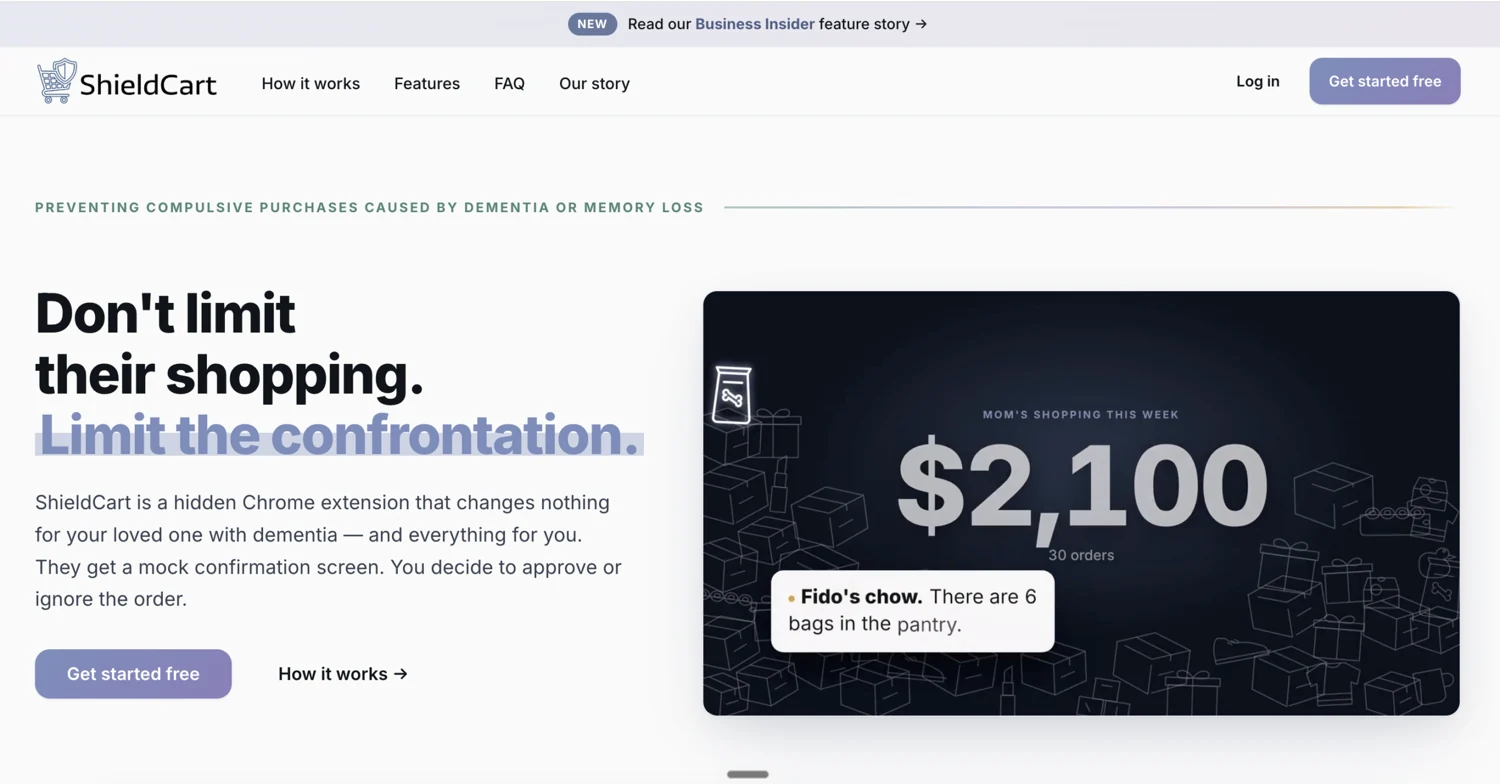
Sources and review scope
I used the no-account demo with simulated data and reviewed ShieldCart’s product materials on November 12, 2026. Extension reliability, real retailer coverage and household outcomes remain unverified here. Elbaz’s career background comes from the LinkedIn profile excerpts provided for this Field Note.